Source: Microsoft
If you can’t keep up with the latest rumor mill on TikTok’s impending doom acquisition, my suggestion is simple: don’t. Or instead, enjoy it for what it is: one of the most absurd bakeoff deals in investment banking history.
Walmart and its always low prices are in the fray. Oracle is looking to find synergies to make enterprise resource planning software more enticing to Gen Z workers. Triller — who the hell are they again? — is supposedly teaming up with an asset management firm (and a planet near the Hoth system) called Centricus according to Bloomberg (to which TikTok responded nah). Twitter is in — maybe? — with key corporate strategic advice from Beyoncé on the social network’s debt underwriting strategy.
SoftBank is apparently looking, and also just happened to announce yesterday its intention to sell off $14 billion of its core Japanese mobile services business to net cash quickly. (The upshot is that at least TikTok lost most of its value before SoftBank’s investment!)
Everything here is absurd. TikTok is absurd. The videos of people doing what they are doing on TikTok are absurd. TikTok’s growth is absurd. A president setting a deadline on the sale of a company is absurd. This process is absurd. Selling a company as large as TikTok in 45 days is absurd. Walmart is absurd (and also a mirage, since they are still banned from New York City lest someone gets discounted soap in a pandemic).
I warned a few weeks ago to “beware bankers” peddling TikTok rumors. And that’s still the right answer, in the sense that of course we are going to get to the furthest reaches of the M&A universe as bankers try to salvage TikTok’s final sale price (“We’re approaching the Centricus system, sir!”). But that approach is so much more boring than just assuming that every rumor is true and trying to imagine Wall Street advisors trundling through this morass of bids.
My advice here is simple: let’s all take our analyst hats off for a week and put on our clown costumes, since — and it’s key you don’t work at TikTok for this or have money at stake in the company — this story is actually enjoyable.
COVID-19 is serious, the U.S. presidential election is weeks away, social justice in our cities is critically important. Just in the past few hours, T’Challa passed away, Hurricane Laura ripped up the Gulf Coast, and the longest continuously-serving Japanese prime minister of the post-war era (yes, I know, that’s a lot of qualifiers) just resigned due to health issues. It can get weighty on the front pages of the newspapers these days.
So it’s just nice to know that you can flip to the business pages and get some farce.
Maybe this whole story will eventually turn into the next great business book à la Barbarians at the Gate. But at least the barbarians then knew how to destroy a company with the proper levels of debt leverage. Here, you’ve got the pre-smoldered detritus of a business being bid on by the company that brought us The Greeter.
Whatever this saga brings next (hint: Microsoft buying the company), I’ll just say this: the warmth and cheeriness that TikTok provided millions of teenagers though short videos of awakward dance routines is the same mirth that it provides acerbic financial analysts with a caustic eye on the markets. In what has been a miserable year for all of us, for that small twinkle of amusement, I’m thankful.
Walmart-exclusive TrillerTok will run on Azure, or Oracle, or something
Source: Microsoft
Los Angeles was always more than a one industry town, even when it comes to technology startups, but media and entertainment (and social networking) were always the big draws in tinseltown.
Now the city’s enterprise tech scene can claim a really big winner with Signal Sciences, the security monitoring and management company that is getting bought by Fastly, a provider of content delivery networking services, for $775 million.
“Our team couldn’t be more excited about the opportunity to join Fastly to continue to drive forward security protections that empower developers. But we also believe this is a great moment to showcase the diversity of the LA technology scene,” wrote Signal Sciences chief executive, Andrew Peterson, in a direct message. “Being the largest enterprise tech outcome ever here, we’re just one of so many great deep technology companies who are paving the way for the next generation of SoCal based start ups. We’re thrilled to help lead the way for the broader tech community in Los Angeles.”
Content delivery and security go hand-in-hand and some of the biggest companies online use businesses like Fastly and its competitor, Cloudflare, to ensure that their online presence doesn’t go offline — and that browsers can quickly download and deliver websites.
Fastly said that the acquisition of Signal Sciences’ business will boost its ability to provide better security for applications and APIs — the connective fabric between different services that knit different technologies together behind the scenes.
With the acquisition, Fastly is planting a flag as a new competitor in the cybersecurity market, even as companies like Amazon, Microsoft, and Google offer a wider array of services under their Internet as a service business lines.
Application security is a higher value piece of the services stack and it takes advantage of the natural position that a company like Fastly has as a content distribution network.
“Fastly was founded to meet developers’ need for greater visibility and control. Now, as the digital transformation movement continues to accelerate, DevOps teams are struggling with inadequate and inflexible security tools,” said Joshua Bixby, Chief Executive Officer of Fastly, in a statement. “Together with Signal Sciences, we will give developers modern security tools designed for the way they work.”
Los Angeles, California, USA – March 23, 2016: Aerial view of the Hollywood sign at dusk in Los Angeles. The image has been taken from an helicopter flying over LA. Image Credit: Getty Images/franckreporter
Under the terms of the agreement Fastly is buying Signal Sciences for $200 million in cash and approximately $575 million worth of stock, subject to customary adjustments for transactions, according to a statement.
Fastly is also setting up a $50 million retention pool of restricted stock units to give out to Signal Sciences employees.
Signal Sciences employees aren’t the only winners in the deal. The company raised $63 million in venture financing from investors including CRV, Harrison Metal, Index Ventures, Oreilly Alphatech Ventures, Lead Edge Capital, and individual investors including former Facebook security officer Alex Stamos, and Etsy chief executive Chad Dickerson.
The company’s last round was a $35 million investment raised about two years ago, and one investor with knowledge of the company’s cap table called it a “pretty efficient exit” for its backers.
Morgan Stanley & Co. and Union Square Advisors are acting as financial advisors to Fastly, and Cooley LLP is acting as its legal advisor with regard to the transaction, according to a statement. Qatalyst Partners is acting as financial advisor to Signal Sciences, while Goodwin Procter was the company’s lawyer.
LA gets a big SAAS exit as Fastly nabs the Culver City-based Signal Sciences for 5M
Source: Microsoft
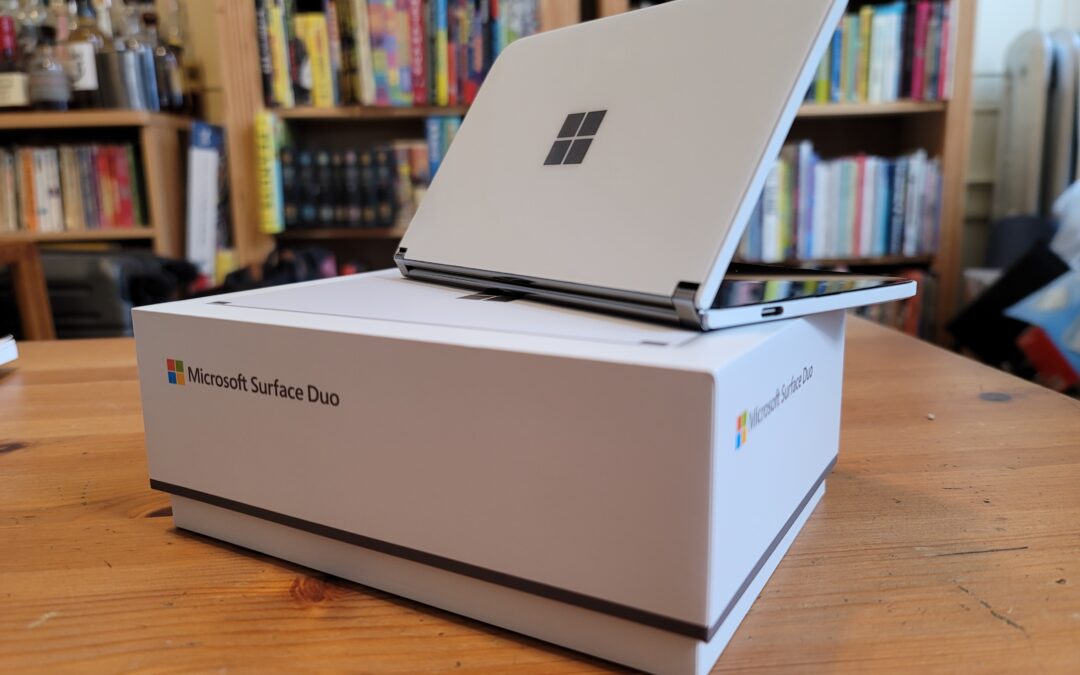
I can’t remember the last time I did a hands-on with a device prior to powering it on. The idea of basing posts entirely around glamour shots without really interfacing with the product feels like a relic of an early era of gadget blogging. But every so often a device comes along that warrants the approach.
There will be a far more in-depth review of the Surface Duo. I will write a lot of words on this website about the experience of using the software and living with the device as my go-to handset. For now, however, you and I both are going to have to settle for a handful of photos and a few choice words about the form factor.
But if any product deserves a little bit of pre-review love, it’s the Surface Duo. It’s been a while since I’ve seen so many fellow TechCrunch editors this excited about a new device. The earliest foldables are probably the closest comparison. And at first glance, at least, the Duo seems to be more solidly constructed than some of those earliest foldable units. No surprise, really, given that the weak link was the foldable screen itself.
Image Credits: Brian Heater
Microsoft’s approach to increased real estate arrives by way of two independent but connected screens. It’s far from the first product to take the approach, but out of the box, it seems to be a far more solid approach. There’s no fragile, glass-less display to be damaged and no way to accidentally get debris trapped under the screen. The downside, however, is the gap between the displays. Again, more on that in the upcoming review.
What really jumped out at me the most upon unboxing is how compact the device is. I’d seen it in videos and demos, but somehow expected the device to be larger. It’s not small by any means (in fact, it’s wider than the Note 20), but depending on how tall you are, you should probably be able to stick it in your pants pocket without too much trouble.
Image Credits: Brian Heater
Microsoft has made it clear that — as far as hardware is concerned — the hinge is very much the thing. It does a double duty both in terms of maintaining the connection between the displays (including the dual-batteries and offering a fluid experience) and allowing the product to conform to a variety of different angles. How a majority of users interact with it remains to be seen, given that it’s a new form factor in some key ways, so the device has to be good in any configuration. As such, the 360-degree swiveling has to be smooth, while remaining rigid enough to keep one screen propped up.
So far, so good. The Duo hardware feels truly premium, as one would hope/expect from a $1,400 device. The new Surface arrives September 10. Expect a much deeper and satisfactory review of the product soon.
Here’s the Surface Duo
Source: Microsoft
For Dr. Cecily Morrison, research into how AI can help people who are blind or visually disabled is deeply personal. It’s not only that the Microsoft Principal Researcher has a 7-year-old son who is blind, she also believes that the powerful AI-related technologies that will help people must themselves be personal, tailored to the circumstances and abilities of the people they support.
We will see new AI techniques that will enable users to personalize experiences for themselves,” says Dr. Morrison, who is based at Microsoft Research Cambridge and whose work is centered on human-computer interaction and artificial intelligence. “Everyone is different. Having a disability label does not mean a person has the same needs as another with the same label. New techniques will allow people to teach AI technologies about their information needs with just a few examples in order to get a personalized experience suited to their particular needs. Tech will become about personal needs rather than disability labels.”
Image Credits: Cecily Morrison
Dr. Morrison will speak at Sight Tech Global, a virtual, global event on Dec. 2-3 that will explore how AI-related technologies will shape the future of accessibility for people who are blind and visually impaired. The event, which launched on TechCrunch, takes place on Dec. 2-3 and is free to attendees. Pre-register here.
Dr. Morrison is currently involved in several research projects that explore the potential of AI to enable people who are blind or low vision. Project Tokyo, for example, is exploring ways to provide information about the immediate social environment to enhance people’s existing sense-making skills and abilities.
The team works closely with people who are blind or low vision to ensure that the research is grounded in their experience and needs. “It is critical that we imagine what the technologies do for people who are blind and low vision in a way that is empowering. Many blind and low vision people have well developed strategies for making sense of their environments. AI technology must augment these acute sense-making skills, covering information gaps. It is important that technology is not seen as replacing vision, but rather augmenting the information a person already has when going about their lives.”
As the mother to a blind child, Dr. Morrison believes she has gotten “to see the world in a different perspective, taken part in communities that I wouldn’t otherwise have seen or taken part.” That has definitely driven her research. An inclusive design project, Torino, was inspired by the need of blind children to learn to code. What resulted was a physical programming language designed to teach computational thinking and basic programming to children ages 7–11, regardless of their level of vision. The effort led to a spin out project called Code Jumper, which is now commercially available from the American Printing House for the Blind.
That success came from working very closely through trial and error with blind 7-11-year-olds, which is also where Dr. Morrison deepened her understanding of how critical it is for researchers to work closely with the people they aim to help. Then too, she points out, people with vision limitations are outstanding early technology adopters in general.
“In the agent space,” Dr. Morrison says, “we have done some work with people who are blind and low vision because, at the time we started working with agents, typical people were not heavy users of agents. In fact, most people thought they were toys. Whereas for people who are blind and low vision were early adopters and heavy users of agent technologies. They really could help push the boundaries of what these technologies can do. If you’re not using technology regularly, you can’t really imagine what the next steps are. So, it’s a great example of inclusive design where we can work with this cohort of very able blind people to help us think about what agents of the future are going to look like for all of us.”
Dr. Morrison holds a PhD in Computer Science from University of Cambridge and an undergraduate degree in Ethnomusicology from Barnard College, Columbia University. She shares life with her partner and two children, one of whom is blind.
Pre-registration for Sight Tech Global is open. And the event is free.
Sight Tech Global is a sponsor-driven event, and our partners so far include Waymo, Google, Wells Fargo, TechCrunch and Verizon Media. All proceeds go to the Vista Center for the Blind and Visually Impaired 501 (c)(3). For more information on sponsorship, please contact us at sponsor@sighttechglobal.com.
Microsoft researcher Dr. Cecily Morrison will discuss keeping AI ‘personal’ at Sight Tech Global
Source: Microsoft
Microsoft today announced that Immersive Reader, its service for developers who want to add text-to-speech and reading comprehension tools to their applications, is now generally available.
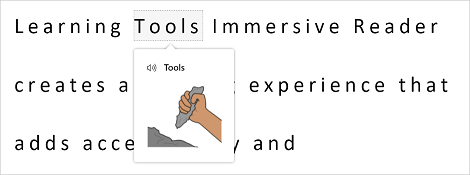
Immersive Reader, which is part of the Azure Cognitive Services suite of AI products, developers get access to a text-to-speech engine, but just as importantly, the service offers tools that help readers improve their reading comprehension, be that through displaying pictures over commonly used words or separating out syllables and parts of speech of a given sentence.
It also offers a distraction-free reading view, similar to what you will find in modern browsers. Indeed, if you use Microsoft’s Edge browser, Immersive Reader is already included there as part of the distraction-free article view, together with its other accessibility features. Microsoft also bundled its translation service with Immersive Reader.
Image Credits: Microsoft
With today’s launch, Microsoft is adding support for fifteen of its neural text-to-speech voices to the service, as well as five new languages (Odia, Kurdish (Northern), Kurdish (Central), Pashto and Dari) from its translation service. In total, Immersive Reader now supports 70 languages.
As Microsoft also announced today, the company has partnered with Code.org and SAFARI Montage to bring Immersive Reader to their learning solutions.
“We’re thrilled to partner with Microsoft to bring Immersive Reader to the Code.org community,” said Hadi Partovi, Founder and CEO of Code.org. “The inclusive capabilities of Immersive Reader to improve reading fluency and comprehension in learners of varied backgrounds, abilities, and learning styles directly aligns with our mission to ensure every student in every school has the opportunity to learn computer science.”
Microsoft says it saw a 560% increase in use of Immersive Reader from February to May, likely because a lot of people were starting to look for new online education tools as the COVID-19 pandemic started. Today, more than 23 million people use it every month and Microsoft expects that number to go up once again in the fall, as the new school year starts.
Azure’s Immersive Reader is now generally available
Source: Microsoft
Microsoft today launched Transcribe in Word, its new transcription service for Microsoft 365 subscribers, into general availability. It’s now available in the online version of Word, with other platforms launching later. In addition, Word is also getting new dictation features, which now allow you to use your voice to format and edit your text, for example.
As the name implies, this new feature lets you transcribe conversations, both live and pre-recorded, and then edit those transcripts right inside of Word. With this, the company goes head-to-head with startups like Otter and Google’s Recorder app, though they all have their own pros and cons.
Image Credits: Microsoft
To get started with Transcribe in Word, you simply head for the dictate button in the menu bar and click on ‘transcribe.’ From there, you can record a conversation as it happens — by recording it directly through a speakerphone and your laptop’s microphone, for example — or by recording it in some other way and then uploading that file. The service accepts .mp3, .wav, .m4a and .mp4 files.
As Microsoft Principal Group PM Manager for Natural User Interface & Incubation, Dan Parish, noted in a press briefing ahead of today’s announcement, when you record a call live, the transcription actually runs in the background while you conduct your interview, for example. The team purposely decided not to show you the live transcript, though, because its user research showed that it was distracting. I admit that I like to see the live transcript in Otter and Recorder, but maybe I’m alone in that.
Like with other services, Transcribe in Word lets you click on individual paragraphs in the transcript and then listen to that at a variety of speeds. Since the automated transcript will inevitably have errors in it, that’s a must-have feature. Sadly, though, Transcribe doesn’t let you click on individual words.
One major limitation of the service right now is that if you like to record offline and then upload your files, you’ll be limited to 300 minutes, without the ability to extend this for an extra fee, for example. I know I often transcribe far more than 5 hours of interviews in any given month, so that limit seems low, especially given that Otter provides me with 6,000 minutes on its cheapest paid plan. The max length for a transcript on Otter is 4 hours while Microsoft’s only limit for is a 200MB file upload limit, with no limits on live recordings.
Another issue I noticed here is that if you mistakenly exit the tab with Word in it, the transcription process will stop and there doesn’t seem to be a way to restart it.
It also takes quite a while for the uploaded files to be transcribed. It takes roughly as long as the conversations I’ve tried to transcribe), but the results are very good — and often better than those of competing services. Transcribe for Word also does a nice job separating out the different speakers in a conversation. For privacy reasons, you must assign your own names to those — even when you regularly record the same people.
It’d be nice to get the same feature in something like OneNote, for example, and my guess is Microsoft may expand this to its note-taking app over time. To me, that’s the more natural place for it.
Image Credits: Microsoft
The new dictation features in Word now let you give commands like “bold the last sentence,” for example, and say “percentage sign” or “ampersand” if you need to add those symbols to a text (or “smiley face,” if those are the kinds of texts you write in Word).
Even if you don’t often need to transcribe text, this new feature shows how Microsoft is now using its subscription service to launch new premium features to convert free users to paying ones. I’d be surprised if tools like the Microsoft Editor (which offers more features for paying users), this transcription service, as well as some of the new AI features in the likes of Excel and PowerPoint, didn’t help to convert some users into paying ones, especially now that the company has combined Office 365 and Microsoft 365 for consumers into a single bundle. After all, just a subscription to something like Grammarly and Otter would be significantly more expensive than a Microsoft 365 subscription.
Microsoft brings transcriptions to Word
Source: Microsoft
Cloud photo storage app Ever is shutting down, citing increased competition with the default services offered by Apple and Google as the cause. The company, however, had other issues beyond the plight of a small startup trying to compete with tech giants. Last year, NBC News reported the company had been using its customers’ photos to develop facial recognition technology that it turned around and offered for sale by way of the Ever API to business clients, including law enforcement and the military.
The company’s real business model wasn’t properly disclosed to consumers who visited the Ever website or app, the report said.
Ever had argued at the time it wasn’t sharing people’s private photos or any identifying information with its facial recognition customers. Instead, it had used the billions of images its customers had uploaded to build an algorithm that can learn from matches and is now able to train itself on other data.
The American Civil Liberties Union (ACLU) of Northern California said the business was an “egregious violation of people’s privacy,” as few knew their family photos were being used to build surveillance technology.
While other companies, including Amazon and Microsoft, have built out facial recognition technology products of their own in recent years, they do so using public data sets. Ever had used its own users’ photos and without informed consent. (A line was added to Ever’s privacy policy only after NBC News had begun to investigate and reached out to the company, the report said.)
After the news report came out, Ever rebranded its Ever AI as Paravision to distance itself from the controversy.
As of last month, Paravision was continuing to tout its product. In a July press release, the company announced it had achieved top-two accuracy globally on the National Institute of Standards and Technology (NIST) Face Recognition Vendor Test (FRVT) July 27 report focused on face recognition with masks. The company also sells a suite of activity recognition tools in addition to its face-detection solutions. It appears this business lives on, despite the consumer app closure.
Unfortunately, 2019 was not the first time Ever had made headlines for its poor business practices.
Amid the increased pressure from Google and Apple’s photo technology advances, Ever back in 2016 began to spam its users’ contacts over SMS with invites to check out its app. SMS invite spam had been a popular, if generally disliked, growth hack technique for social apps at the time. In Ever’s case, it helped the app climb the iOS charts ahead of its Android release.
It’s also notable that Ever is attempting to use the current focus on tech company monopolies as a way to redirect blame for the Ever app shutdown.
Today, Apple, Google and other tech giants are under antitrust investigations in the U.S., as the government works to determine if these companies have used their platform status to damage or even eliminate their competition.
Ever specifically calls out Apple and Google in its announcement, saying that:
The service has been around for over seven years, but with increasing competition over the last several years from Apple and Google’s photo storage products (excellent products in their own right, and worth checking out as an alternative), the Ever service is no longer sustainable.
The implication here is that Ever didn’t have a chance when faced with such steep competition, and now its business is over.
The announcement fails to mention how Ever’s own behavior may have played a role in eroding its users’ trust over the years or how it has later found success as a B2B technology solution provider.
However, the company’s shutdown FAQ makes reference to its facial recognition technology. Here, the company explains that once Everalbum shuts down the Ever service, users’ photos and videos will “never be used for any purpose, including improving computer vision capabilities such as face recognition.” It says also it will delete user data, except in cases where it’s required by law to keep it, and confirms users’ actual photos were never sold to third parties.
That’s too little, too late for Ever’s customers, who would never had agreed to allowing their photos to be used to build facial recognition technology in the first place. Now that the technology is built, it seems Ever has no further need for the initial training data collected over the years.
The Ever service shuts down at 11:59 p.m PDT on August 31, 2020. Customers will be able to export data and delete their account before then, the company says.
Paravision, as the remaining part of Ever’s company is called, has raised $29 million in venture funding, according to data from Crunchbase. (This includes funds raised as Everalbum.) Investors in the company to date include Icon Ventures, Felicis Ventures, Khosla Ventures, Trinity Capital Investment, UpHonest Capital, Atomic and several others. Typically, Atomic functions as both co-founders and investors.
Ever, once accused of building facial recognition tech using customer data, shuts down consumer app
Source: Microsoft
Hello and welcome back to Equity, TechCrunch’s venture capital-focused podcast where we unpack the numbers behind the headlines.
This is Equity Monday, our weekly kickoff that tracks the latest big news, chats about the coming week, digs into some recent funding rounds and mulls over a larger theme or narrative from the private markets. You can follow the show on Twitter here, and myself here, and don’t forget to check out last Friday’s episode.
What was on the docket this morning? All sorts of good stuff, though the Sumo Logic S-1 did drop just after we wrapped. Here’s today’s rundown:
Whew, with YC and Palantir this week and a chat with Twilio’s CEO it’s going to be an active few days. Ready?
Equity drops every Monday at 7:00 a.m. PT and Friday at 6:00 a.m. PT, so subscribe to us on Apple Podcasts, Overcast, Spotify and all the casts.
Equity Monday: YC Demo Day, two funding rounds and where’s Palantir’s S-1?
Source: Microsoft
When Congress called in tech CEOs to testify a few weeks ago, it felt like a defining moment. Hundreds of startups have become unicorns, with the largest worth more than $1 trillion (or perhaps $2 trillion). Indeed, modern tech companies have become so entrenched, Facebook is the only one of the Big Five American tech shops worth less than 13 figures.
The titanic valuations of many companies are predicated on current performance, cash on hand and lofty expectations for future growth. The pandemic has done little to stem Big Tech’s forward march and many startups have seen growth rates accelerate as other sectors rushed to support a suddenly remote workforce.
But inside tech’s current moment in the sun is a concern that Congress worked to highlight: are these firms behaving anti-competitively?
By now you’ve heard the arguments concerning why Big Tech may be too big, but there’s a neat second story that we, the Equity crew, have been chatting about: some startups are racing into the big kill zone.
They have to be a bit foolhardy to take on Google Gmail and Search, Amazon’s e-commerce platform or Apple’s App Store. Yet, there are startups targeting all of these categories and more, some flush with VC funding from investors who are eager to take a swing at tech’s biggest players
If the little companies manage to carve material market share for themselves, arguments that Big Tech was just too big to kill — let alone fail — will dissolve. But today, their incumbency is a reality and these startups are merely bold.
Still, when we look at the work being done, there are enough companies staring down the most valuable companies in American history (on an unadjusted basis) that we had to shout them out. Say hello to the “anti-antitrust club.”
Hey and Superhuman are coming after Gmail
Gmail has been the undisputed leader in consumer email for years (if not enterprise email, where Microsoft has massive inroads due to Exchange and Outlook). Startups have contested that market, including Mailbox, which sold to Dropbox for about $100 million back in 2013, but whenever a new feature came along that might entice users, Gmail managed to suck it up into its app.
Meet the anti-antitrust startup club
Source: Microsoft
Amit Garg and Sanjay Rao have spent the bulk of their professional lives developing technology, founding startups and investing in startups at places like Google and Microsoft, HealthIQ, and Norwest Venture Partners.
Over their decade-long friendship the two men discussed working together on a venture fund, but the time was never right — until now. Since last August, the two men have been raising capital for their inaugural fund, Tau Ventures.
The name, like the two partners, is a bit wonky. Tau is two times pi and Garg and Rao chose it as the name for the partnership because it symbolizes their analytical approach to very early stage investing.
It’s a strange thing to launch a venture fund in a pandemic, but for Garg and Rao, the opportunity to provide very early stage investment capital into startups working on machine learning applications in healthcare, automation and business was too good to pass up.
Garg had spent twenty years in Silicon Valley working at Google and launching companies including HealthIQ. Over the years he’d amassed an investment portfolio that included the autonomous vehicle company, Nutonomy, BioBeats, Glooko, Cohero Health, Terapede, Figure1, HealthifyMe, Healthy.io and RapidDeploy.
Meanwhile, Rao, a Palo Alto, Calif. native, MIT alum, Microsoft product manager and founder of the Accelerate Labs accelerator in Palo Alto, Calif., said that it was important to give back to entrepreneurs after decades in the Valley honing skills as an operator.
Both Rao and Garg acknowledge that there are a number of funds that have emerged focused on machine learning including Basis Set Ventures, SignalFire, Two Sigma Ventures, but these investors lack the direct company building experience that the two new investors have.
Garg, for instance, has actually built a hospital in India and has a deep background in healthcare. As an investor, he’s already seen an exit through his investment in Nutonomy, and both men have a deep understanding of the enterprise market — especially around security.
So far, the company has made three investments automation, another three in enterprise software, and five in healthcare.
The firm currently has $17 million in capital under management raised from institutional investors like the law firm Wilson Sonsini and a number of undisclosed family offices and individuals, according to Garg.
Much of that capital was committed after the pandemic hit, Garg said. “We started August 29th… and did the final close May 29th.”
The idea was to close the fund and start putting capital to work — especially in an environment where other investors were burdened with sorting out their existing portfolios, and not able to put capital to work as quickly.
“Our last investment was done entirely over Zoom and Google Meet,” said Rao.
That virtual environment extends to the firm’s shareholder meetings and conferences, some of which have attracted over 1,000 attendees, according to the partners.
Launched with million by two former Norwest investors, Tau Ventures is ready for its closeup